 In 2025, I started a small experiment.
I wanted to build a global SaaS product that combines AI with spiritual and mystical tools.
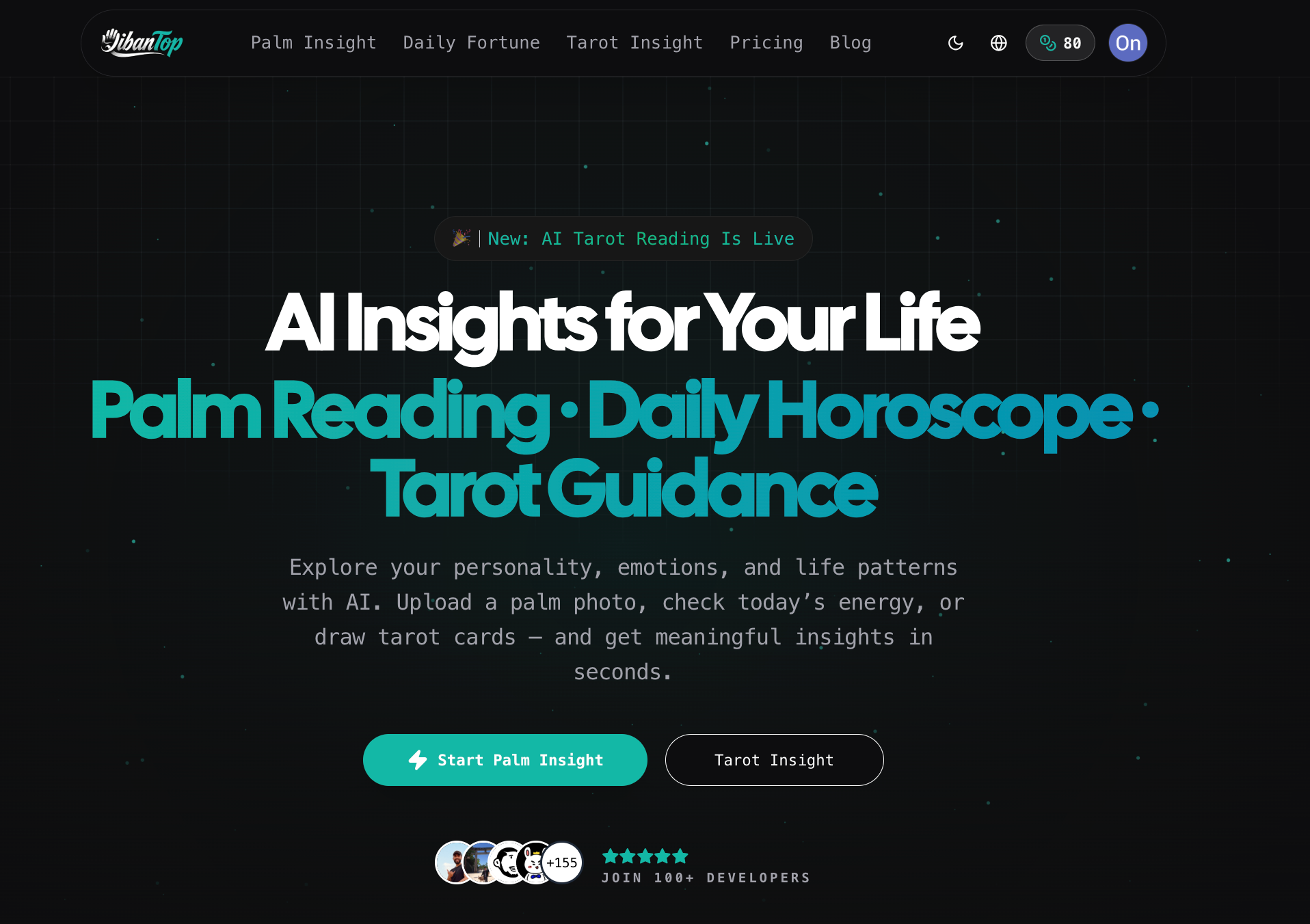
That experiment became qiban.top.
This article isn't a success story.
It's a real story about building a product from scratch as an indie developer, launching it globally, and trying to find the first users.
Why I Built qiban.top
Over the past few years, AI technology has advanced incredibly fast.
We now have:
- AI chat assistants
- AI image generation
- AI object recognition
- AI coding tools
But while exploring product ideas, I noticed something interesting.
Spiritual and mystical content has always had strong demand worldwide.
Topics like:
- Tarot reading
- Palm reading
- Astrology
- Daily fortune
These topics are extremely popular on platforms like:
- TikTok
- YouTube
Millions of people are curious about these topics.
However, many existing websites feel outdated:
- Old design
- Poor user experience
- Very basic interpretations
So I started thinking:
What if we combine AI with mystical tools to create a modern interactive experience?
That's how qiban.top was born.
What qiban.top Does
qiban.top is an AI-powered platform that offers several spiritual exploration tools.
These tools are designed for curiosity, reflection, and entertainment.
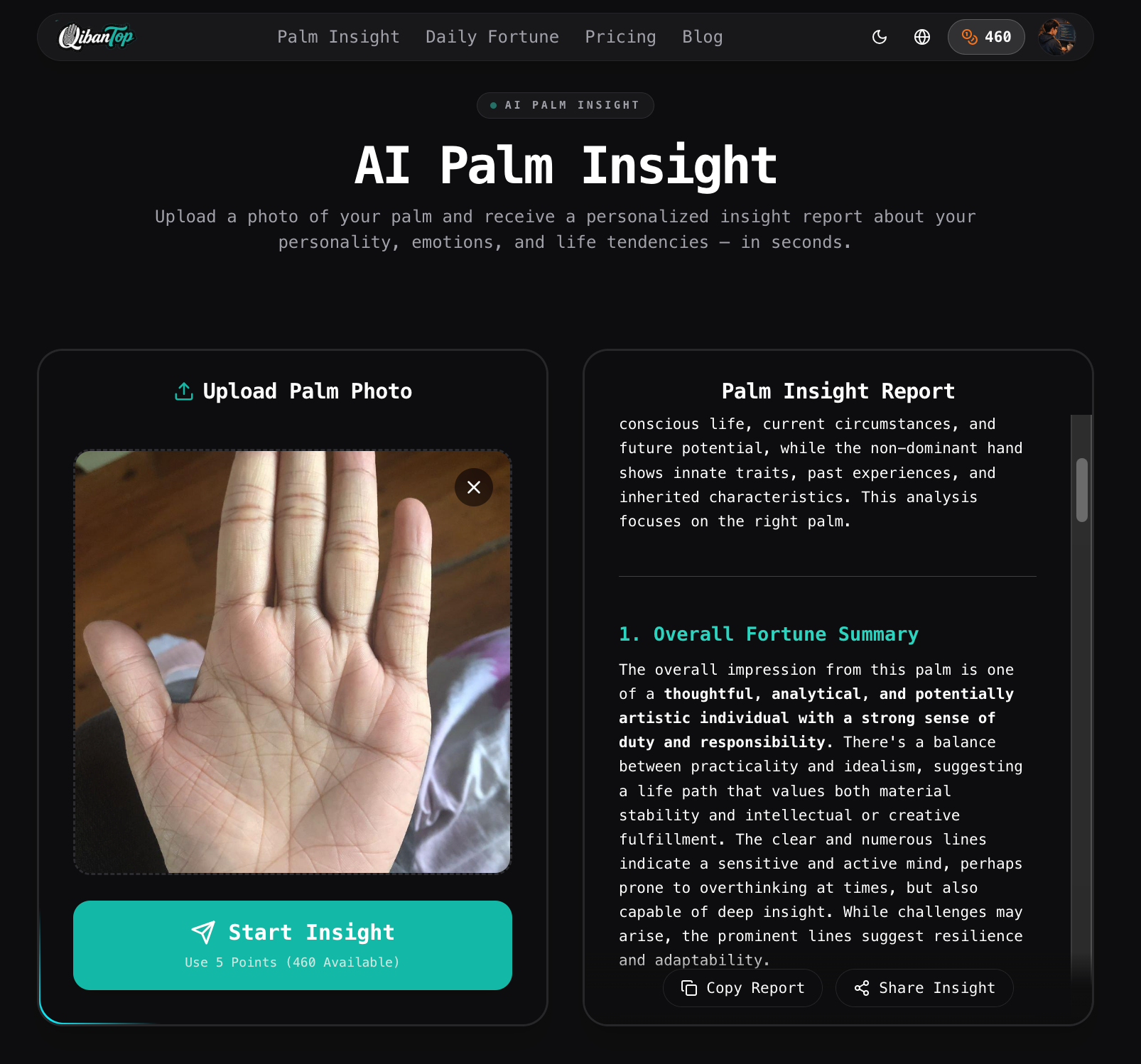
AI Palm Reading
Users can upload a photo of their palm.
The AI analyzes features such as:
- Life line
- Heart line
- Head line
- Personality indicators
- Life tendencies
Behind the scenes, the system combines:
image recognition + AI interpretation.
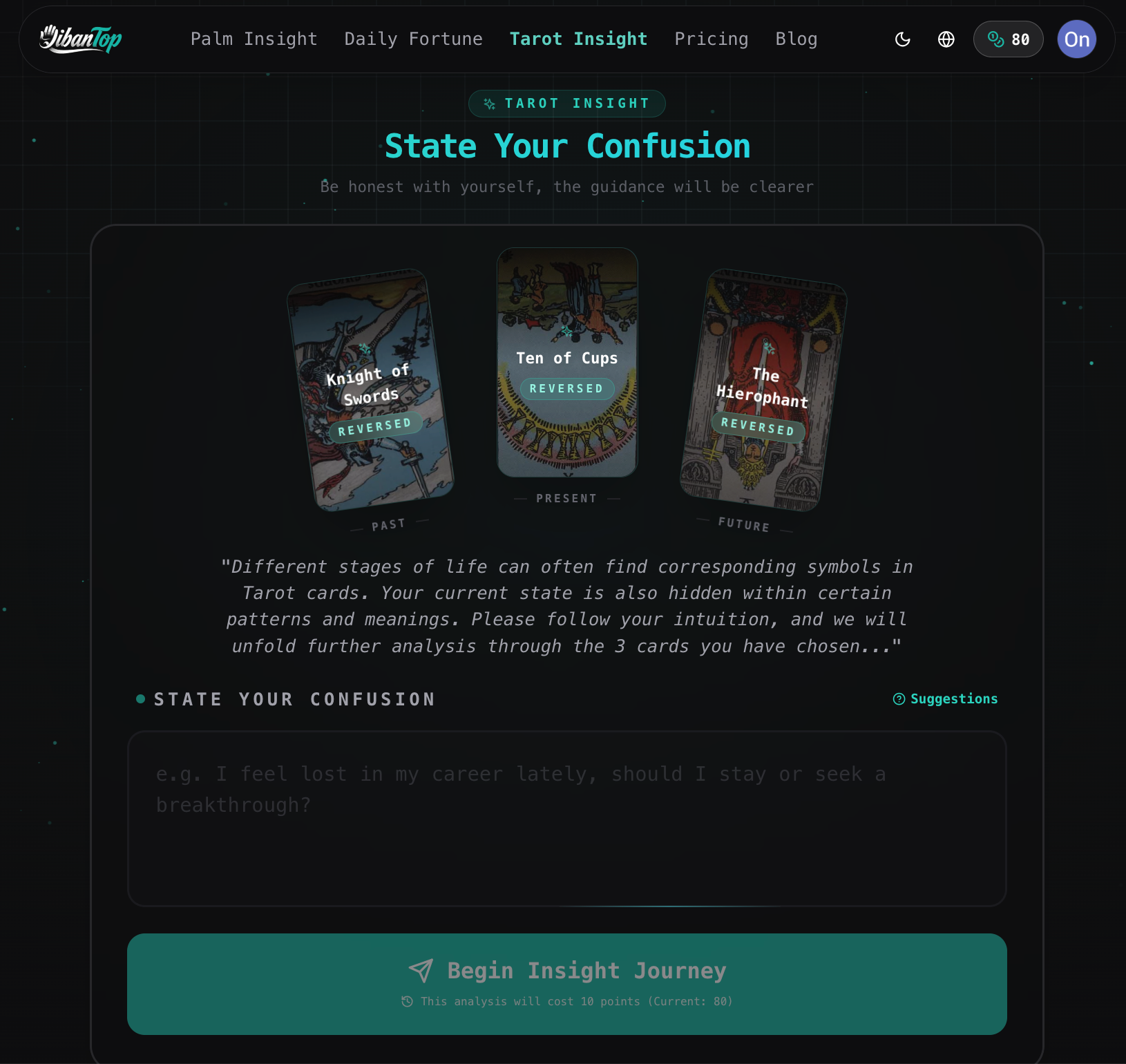
AI Tarot Reading
Users can perform tarot readings directly online.
For example:
- 3 Card Spread
- Past / Present / Future
The AI generates interpretations based on the selected cards.
The goal isn't to predict the future with certainty.
Instead, it's meant to provide perspective, reflection, and inspiration.
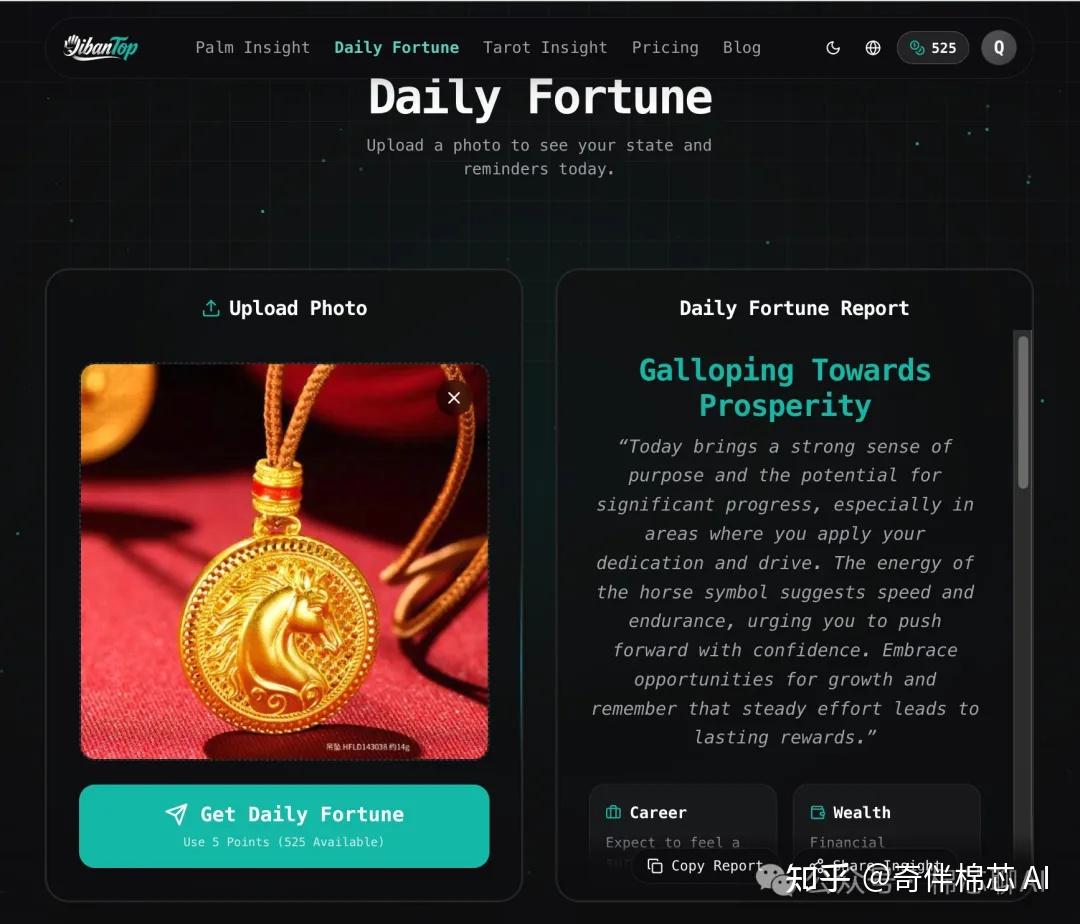
Daily Fortune Cards
Users can draw a daily fortune card.
Each card includes insights about:
- Love
- Career
- Energy
- Advice
This creates a lightweight daily ritual experience.
The Tech Stack Behind qiban.top
Many people assume building a SaaS product requires a huge engineering team.
But modern tools make it possible for indie developers to build powerful products alone.
The core stack behind qiban.top includes:
Frontend
Next.js
Next.js is ideal for:
- SEO
- fast page performance
- server-side rendering
- scalable web apps
Backend & Database
Supabase
Supabase provides:
- PostgreSQL database
- Authentication
- API services
- File storage
It works extremely well for indie SaaS products.
Payment System
Creem
Creem handles:
- subscriptions
- billing
- payment infrastructure
This removes the need to build complex payment systems from scratch.
Starting From an Open Source SaaS Template
The foundation of qiban.top came from an open source SaaS starter template.
However, the template was only the starting point.
I made extensive modifications, including:
- redesigning major parts of the UI
- rebuilding backend logic
- integrating AI features
- improving SEO structure
Rebuilding the Admin Dashboard
One of the biggest improvements was the admin system.
I expanded the dashboard to include features such as:
- user management
- AI usage tracking
- API monitoring
- content management
- analytics overview
- system logs
For any SaaS product, internal tools are just as important as the public features.
Designing AI Interpretation Systems
The mystical features were not included in the template.
I had to design them from scratch.
This included:
- tarot card logic
- palm reading interpretation flow
- AI prompt engineering
- structured interpretation outputs
These systems combine traditional mystical frameworks with modern AI generation.
AI Coding Changed My Development Speed
Another major factor was AI-assisted coding.
Tools like AI coding assistants helped with:
- generating boilerplate code
- debugging
- refactoring
- UI improvements
Many features that once required days of work can now be implemented in a few hours.
This is why we are seeing a rise in indie hackers building full SaaS products alone.
The Hardest Part: Getting Traffic
After launching the product, I quickly realized something:
Building the product was the easy part.
Getting users was much harder.
When qiban.top first launched, the website had:
almost zero traffic.
Sometimes only a few visitors per day.
Every indie developer goes through this stage.
You start wondering:
- Did I build the wrong product?
- Does anyone actually want this?
- Is building a global SaaS too difficult?
But this stage is normal.
First Attempt: SEO and Backlinks
My first strategy was SEO.
Mystical topics are actually perfect for search traffic.
People constantly search things like:
- how to read palm lines
- tarot card meanings
- daily tarot reading
- three card tarot spread meaning
So I started writing blog content.
Topics include:
- beginner tarot guides
- explanations of tarot cards
- palm reading basics
- spiritual interpretation methods
I also tried building backlinks through platforms like:
- Medium
- Dev.to
- indie developer communities
- AI tool directories
However, the early results were very slow.
SEO takes time.
Google needs time to:
- discover pages
- index content
- build ranking signals
Sometimes you publish articles and see no traffic for weeks or months.
This is the stage where many indie developers give up.
Second Attempt: Posting on Reddit
The next experiment was Reddit.
There are many communities related to tarot and spirituality, such as:
- r/tarot
- r/palmistry
- r/occult
- r/spirituality
These communities contain exactly the type of users who might be interested in qiban.top.
But I quickly discovered something.
Reddit is extremely strict about promotion.
If you post product links too directly, several things can happen:
- posts get removed
- accounts get flagged
- moderators mark it as spam
Some of my early posts were removed almost immediately.
Sometimes before anyone even saw them.
Eventually I realized that direct promotion doesn't work well on Reddit.
A better approach is:
- participate in discussions
- share knowledge
- build account history
- occasionally mention your product naturally
It takes more time, but it's far less likely to be treated as spam.
The Reality of Indie SaaS
Many startup stories online focus on success.
But the reality of building products is often much slower.
Launching a product is just the beginning.
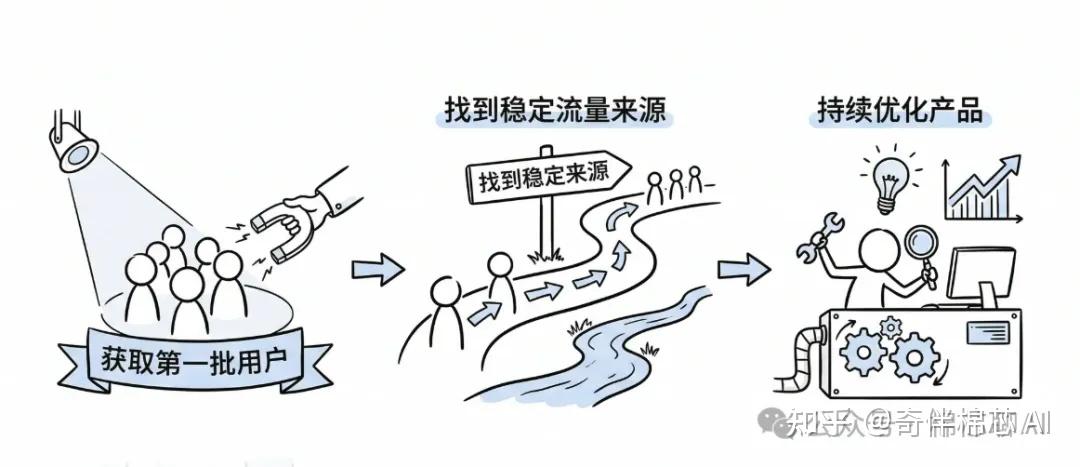
The real challenge is:
- getting the first users
- finding reliable traffic channels
- continuously improving the product
You might spend weeks doing things like:
- writing blog posts
- participating in communities
- improving features
And still see very little immediate change.
This is probably the most difficult stage of being an indie developer.
What's Next for qiban.top
Right now, qiban.top is still a small experiment.
But there are many ideas for the future.
For example:
More AI Spiritual Tools
- advanced palm reading
- deeper tarot interpretation
- AI spiritual assistant
Community Content
Instead of only tools, the platform could also include:
- tarot discussions
- spiritual reflections
- personal insight sharing
More AI Creative Experiences
Ideas like:
- AI mystical image generation
- tarot journaling
- personal destiny reports
Final Thoughts
Building products for the global market isn't as impossible as it might seem.
The most important steps are simple:
- Launch early
- Keep improving
- Learn from users
qiban.top is still a small project.
But for me, it represents an ongoing experiment in building AI-powered tools for global users.
If you're curious about AI tarot readings or palm analysis, you can try it here: